
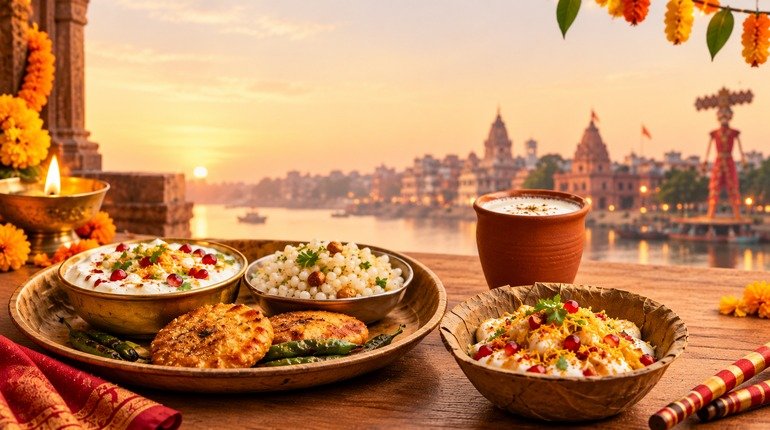
There is a particular smell to an Indian autumn. It’s ghee warming in a kadhai before dawn, marigolds wilting in temple doorways, roasted peanuts from a street cart, and somewhere in the distance, the sugary steam of jalebis being pulled from hot oil. For ten days each year, the country turns into one long celebration, and much of that celebration happens at the table.
This year the timing is close. Sharad Navratri 2026 begins on Sunday, October 11, with Ghatasthapana, and runs for nine nights until Monday, October 19, with Vijayadashami or Dussehra on Tuesday, October 20. In the east, Durga Puja runs from October 16 to October 21, with Mahalaya on October 10. If you’ve ever wanted to see India’s festive season through its food, this is your moment.
Planning a Trip?
Book Trains
What makes this season so interesting for food lovers is a lovely contradiction. In much of North and West India, Navratri is a time of fasting, when grains, onion and garlic leave the kitchen, and cooks get creative with buckwheat, water chestnut, sago and rock salt. In Bengal, Durga Puja is a full-on feast with fish, mutton and mountains of sweets. Then Dussehra arrives, and the whole country breaks into celebration. Here are the cities where you can taste every side of it.
Ahmedabad and Vadodara: Garba Nights and Fafda Mornings
Gujarat doesn’t just celebrate Navratri; it lives it. Every evening, open grounds fill with thousands of dancers moving in circles of garba and dandiya until well past midnight. All that dancing creates serious hunger, and the food stalls ringing the garba grounds stay busy till the early hours.
During the nine days, look for farali (fasting) food done with real flair: sabudana khichdi studded with peanuts, crisp rajgira (amaranth) puris, sweet potato chaat, and farali pattice, which are potato shells stuffed with coconut and dry fruit. Ahmedabad’s Manek Chowk, which turns from jewellery market by day to food street by night, is worth a visit even if you’re not fasting.
The real highlight comes on Dussehra morning, when Gujarat has a tradition all its own: fafda and jalebi. Fafda is a long, crunchy gram-flour strip served with green chillies, a tangy papaya sambharo and kadhi chutney, and it is eaten alongside syrupy jalebis. On this one day, sweet shops across Ahmedabad and Vadodara have queues before sunrise, and families buy it by the kilo. It’s salty, sweet, spicy and crisp all at once, and once you’ve had it on Dussehra morning, it’s hard to imagine the day without it.
Kolkata: Where Devotion Tastes Like a Feast
If Gujarat dances, Kolkata eats. Durga Puja here is less a festival than a citywide open house, with hundreds of themed pandals and crowds that walk from one to another all night long. Food is the fuel for this pandal-hopping, and the city rises to the occasion.
Start with bhog, the offering made to the goddess and then shared with visitors. The classic bhog plate has khichuri (a rich moong dal and rice khichdi), labra (a mixed vegetable dish), begun bhaja (fried aubergine), tomato chutney and payesh (rice pudding). Many community pujas serve it to anyone who comes, and eating it on a crowded bench beside strangers is one of the most moving food experiences in India.
Outside the pandals, the stalls take over: phuchka with tamarind water, egg rolls and kathi rolls, mughlai paratha, ghugni (spiced dried peas) and fish fry. For a sit-down meal, kosha mangsho (slow-cooked mutton) with luchi, or Kolkata biryani with its famous potato, is a Puja tradition in many homes. And the sweets never stop: rosogolla, sandesh, mishti doi and nolen gur specialities that appear as the season turns. On Dashami, the final day, married women play sindoor khela, and visitors leave pandals with sweets in hand, saying goodbye to the goddess until next year.
Mysuru: Royal Dasara and a Sweet Named After the City
Mysuru’s Dasara has been celebrated with royal ceremony for centuries, and the city still dresses for it. The Mysore Palace is lit with nearly a hundred thousand bulbs each evening, and on Vijayadashami the Jamboo Savari procession carries the idol of Goddess Chamundeshwari through the streets on a decorated elephant.
It’s only right that you eat the city’s most famous creation here: Mysore pak, made from gram flour, ghee and sugar. There are two styles worth trying, the older hard and porous version and the softer, ghee-rich kind that melts on your tongue. Beyond the sweet, Mysuru offers some of Karnataka’s best everyday food. Try a crisp Mysore masala dosa with red chutney spread inside, bisi bele bath (a spiced lentil and rice dish), and filter coffee. During Dasara, the city also hosts a food festival, which is an easy way to taste dishes from across Karnataka in one place.
Delhi: Ramlila Grounds and the Art of the Vrat Thali
In Delhi, the season is about Ramlila. Across the city, stages go up in open grounds, and every evening for nine nights the story of Rama is performed to large crowds. On Dussehra, giant effigies of Ravana, Kumbhakarna and Meghnad are burned as fireworks light up the sky.
Food is everywhere around the Ramlila grounds: chaat, gol gappe, aloo tikki, hot jalebis and kulfi. But Delhi is also one of the best places to understand Navratri fasting food. Restaurants and sweet shops across the city put out special vrat thalis with kuttu (buckwheat) puris, singhare (water chestnut) flour pakoras, arbi, aloo in tomato gravy made without onion or garlic, sabudana tikki, makhana kheer and samak rice. Old Delhi’s Chandni Chowk is where you’ll find the most traditional versions, alongside halwai shops frying fresh sweets all day.
On Ashtami and Navami, many households perform kanya pujan, inviting young girls into their homes as forms of the goddess and serving them the classic prasad of puri, kala chana and sooji halwa. Even if you’re just visiting, you’ll find this trio on menus all over the city on those days, and it is simple and very good.
Varanasi: The Oldest City’s Gentle Celebration
Varanasi brings a quieter, deeply spiritual flavour to the season. The Ramnagar Ramlila, held across the river, is one of the oldest in the country, a month-long performance staged across different parts of the town with very little modern equipment. Back in the city, the ghats glow with lamps, and temples to the goddess draw long lines of devotees.
Food in Varanasi during this time is pure and comforting. Mornings start with kachori and sabzi followed by jalebi, eaten standing up at a busy lane-side shop. Fasting devotees turn to singhare ke atte ki puri, aloo jeera and sweets made with milk and khoya. Don’t leave without trying the city’s thandai, or a Banarasi paan after dinner. The pace is slow, the flavours are rich, and every meal feels close to the rhythm of the ghats.
Kullu: Dussehra in the Mountains
Kullu Dussehra is different from almost everything else on this list. It begins on Vijayadashami itself, when most of India is finishing, and continues for about a week. Hundreds of local deities are carried in palanquins from villages across the valley to gather in Dhalpur Maidan, with drums, horns and folk dancers leading them. It’s a sight that feels both ancient and alive.
The food here is Himachali hill cooking. Look for siddu, a steamed wheat bread filled with poppy seed or walnut paste and served with ghee, and babru, a fried bread similar to a kachori. Fresh trout from the Beas River is a local favourite, and you’ll find Himachali dham, a festive meal of rice, lentils and slow-cooked dishes like madra (chickpeas in a yoghurt gravy), served at community gatherings. With cold mountain air and woodsmoke around you, it’s warming food in every sense.
Planning Your Festive Food Trail
If you have the full ten days, a route that captures the season well would begin in Gujarat for the opening nights of garba, move to Kolkata for the main days of Durga Puja, and end either in Delhi or Mysuru for Dussehra. If you want something truly unusual, head to Kullu on Vijayadashami and stay through the following week.
A few practical tips will make the trip easier. Book trains, flights and hotels early, because this is one of the busiest travel periods of the year. Wear comfortable shoes, since pandal-hopping and garba grounds involve a lot of walking. Respect the customs around fasting food and temple offerings, and remember that bhog and prasad are shared as blessings, not just meals. Most of all, go hungry and say yes when someone offers you a plate. During this season, food is how India welcomes you.
Whether it’s a fafda at sunrise in Ahmedabad, a plate of khichuri in a Kolkata pandal, or a warm siddu in the Kullu hills, these ten days offer the same simple message in many languages: the good has won, and it’s time to celebrate together.


