Kullu Dussehra 2026: A Complete Guide to India’s Unique Himalayan Festival
In most parts of India, Dussehra marks the victory of good over evil through the story of Lord Rama's triumph over Ravana. In Kullu, Himachal Pradesh, the festival takes on a distinctive Himalayan character, bringing together village deities, traditional processions, folk music and community celebrations.
Set against the mountains of the Kullu Valley, this centuries-old festival is an opportunity to experience Himachal Pradesh's living traditions alongside its natural beauty.
Kullu Dussehra 2026 is scheduled from 21 to 27 October at Dhalpur Maidan in Kullu. The international festival features a grand chariot procession, the gathering of regional deities, traditional Nati dance and cultural performances.
What makes Kullu Dussehra different?
Kullu Dussehra stands apart because its main celebrations begin on Vijayadashami, when many other parts of India conclude their Dussehra festivities.
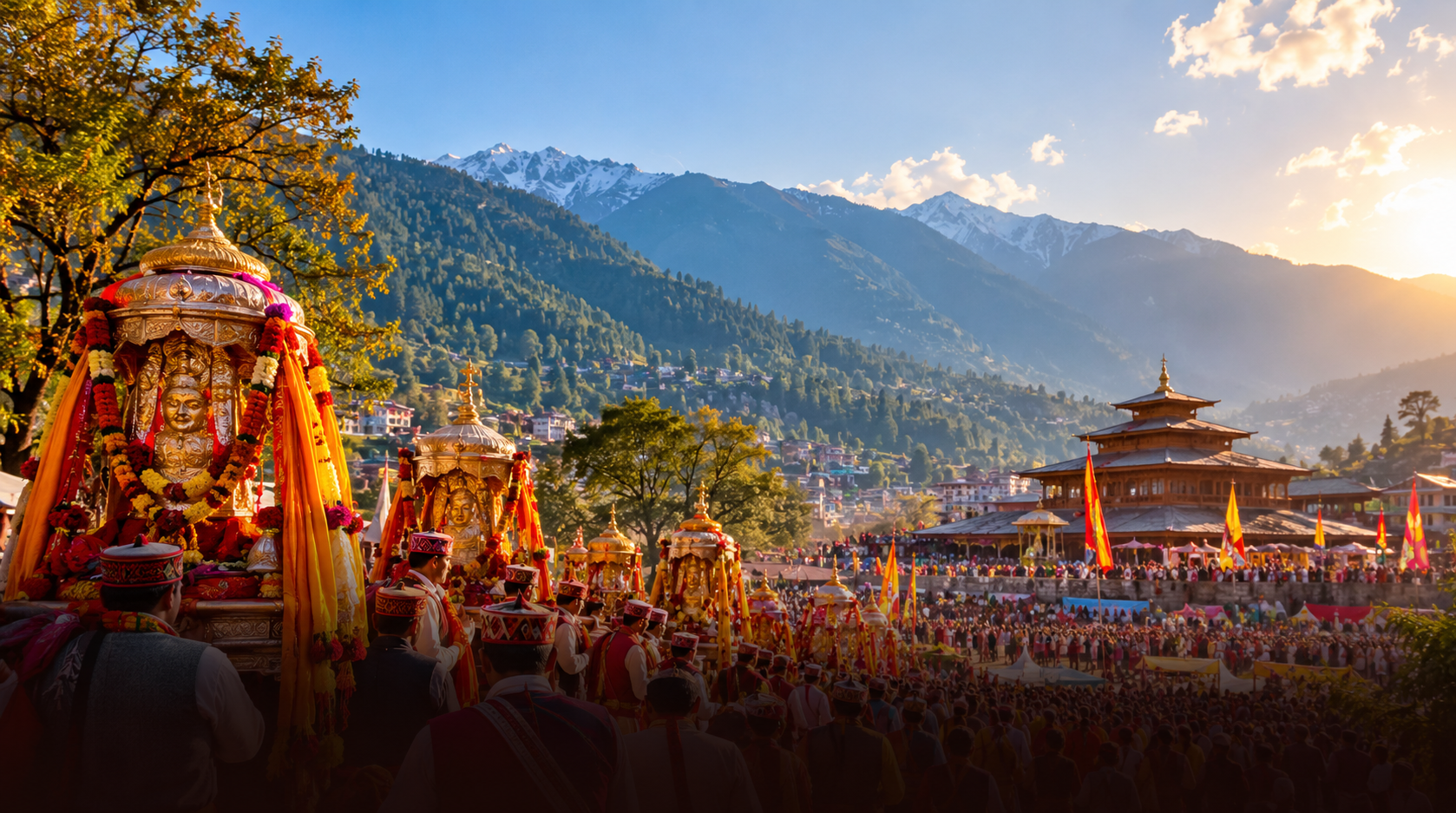
The festival is closely connected to Lord Raghunath, the presiding deity of the region. Deities from neighbouring villages are brought to Dhalpur Maidan in decorated palanquins, accompanied by their devotees and traditional musical ensembles.
This gathering reflects the region's distinctive system of local deity traditions and the cultural ties that connect communities across the valley. Rather than focusing solely on the burning of Ravana's effigy, Kullu Dussehra centres on processions, rituals and the congregation of deities.
Top things to experience at Kullu Dussehra 2026
1. The grand Rath Yatra
The Rath Yatra is one of the festival's most important events. Devotees gather as Lord Raghunath's chariot is taken through the ceremonial route, accompanied by traditional music and participating deities.
The procession offers a glimpse into the religious customs and community traditions that have shaped Kullu's cultural identity over generations.
Arrive early, follow the designated visitor routes and respect the space required for rituals and participants.
2. Witness the gathering of village deities
One of the festival's most distinctive sights is the arrival of deities from villages across the region. Their ornate palanquins, traditional dress and musical processions create a vibrant display of Himachali heritage.
For visitors, this is more than a visual spectacle. It is an opportunity to observe the living religious traditions of the Kullu Valley and understand how local communities maintain their cultural connections.
Follow photography guidelines and ask for permission where appropriate, especially around sacred objects and ritual activities.
3. Enjoy traditional Nati dance and folk music
Nati, a traditional folk dance of Himachal Pradesh, is an important part of the festival's cultural programme. Performers dressed in colourful traditional attire dance to regional music, bringing the grounds alive with rhythm and movement.
The international festival also hosts cultural showcases, creating opportunities to experience performances from Himachal Pradesh and other participating regions. Check the official programme for the confirmed timings of individual events.
4. Explore the festival fair
The fair at Dhalpur Maidan adds another dimension to the celebrations, with stalls, local products and food creating a lively atmosphere. Look out for regional handicrafts, woollen products and other items associated with Himachali culture.
Trying local food and browsing the stalls is an easy way to spend time between festival events. Keep some flexibility in your schedule because the busiest areas can become crowded during major processions.
Where to stay during Kullu Dussehra
Accommodation demand can rise around the festival, so book early and choose your base according to how you plan to explore the valley.
-
Kullu town: A practical option for travellers whose priority is attending the festival at Dhalpur Maidan. Staying nearby can reduce the need for long transfers during crowded event hours.
-
Bhuntar: Worth considering for access to transport connections and the wider Kullu Valley.
-
Manali: Offers a broader choice of visitor accommodation and access to mountain attractions, but it is farther from the main festival venue. Allow extra time for road travel.
-
Smaller villages around the valley: May offer a quieter experience, although transport options and availability can be more limited.
Compare the exact location, road access, cancellation policy and expected journey time to Dhalpur Maidan before booking.
How to reach Kullu
By air: Bhuntar Airport serves the Kullu region, but flight availability can be limited and weather may affect operations. Check current schedules before relying on a flight connection.
By road: Kullu is connected by road to destinations including Chandigarh and Delhi, as well as nearby towns in Himachal Pradesh. Mountain journeys can take longer than expected, especially during peak travel periods.
By bus: Bus services connect Kullu with other destinations in northern India. Confirm departure points, journey times and availability for your dates.
If you're travelling from outside Himachal Pradesh, allow sufficient time for the final road journey. Avoid planning a tight connection immediately before a major festival event.
A suggested 3-day Kullu Dussehra itinerary
Day 1- 21 October: Arrive and experience the opening
Check in, head to Dhalpur Maidan and explore the festival grounds. Prioritise the opening-day ceremonies and Rath Yatra, checking the official schedule for timings.
Day 2- 22 October: Deities, culture and local food
Spend time observing the gathering of regional deities, enjoy folk performances and browse the festival fair. Leave time for meals and rest between events.
Day 3- 23 October: Explore the Kullu Valley
Depending on road conditions and your interests, explore nearby valley villages, local markets or scenic viewpoints before returning to the festival in the evening.
The dates above are suggested itinerary days within the confirmed 21–27 October festival period. The precise timing of rituals and performances should be verified against the official schedule.
Travel tips for Kullu Dussehra 2026
-
Book accommodation early: The festival attracts visitors from across India and beyond.
-
Pack for changing weather: October days can be pleasant, while mornings and evenings in the valley may be chilly.
-
Wear comfortable footwear: You may spend considerable time walking or standing in crowded areas.
-
Keep road travel flexible: Mountain routes and traffic can affect arrival times.
-
Respect local traditions: Follow instructions from organisers and avoid obstructing processions.
-
Check official updates: Confirm the daily programme, access arrangements and transport information before departure.
Extend your trip beyond the festival
If time allows, use Kullu as a base for exploring the wider valley. Manali offers mountain scenery and visitor attractions, while nearby villages provide opportunities to discover local architecture, handicrafts and traditional ways of life.
Plan excursions around current weather, road conditions and the time required to return to Kullu for festival events.
Experience a different side of Dussehra
Kullu Dussehra offers a memorable combination of spirituality, folk culture and Himalayan scenery. From the Rath Yatra to the gathering of village deities and the energy of traditional Nati performances, the festival reveals a side of India's festive traditions that is distinctly local.