
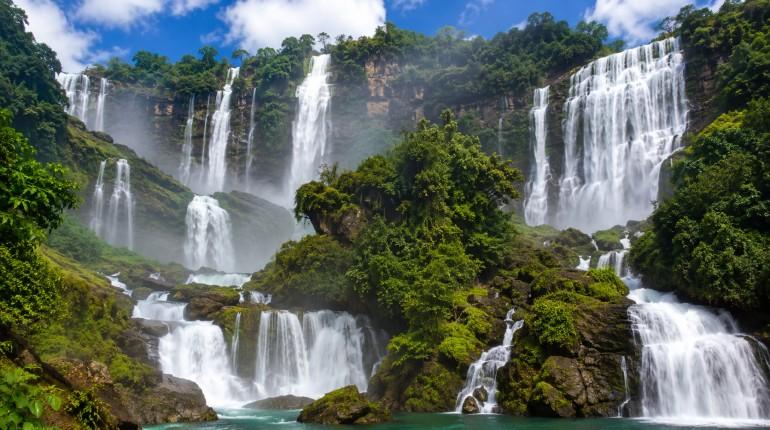
There is a particular kind of joy that only monsoon travel can give you. The smell of wet earth after the first rain. The sound of rivers running full and fast. The way entire landscapes seem to exhale with relief after months of summer heat. And at the heart of it all, the waterfalls.
India is home to some of the most spectacular waterfalls in the world, but most of them reveal their true selves only during the monsoon. Between July and October, these falls transform from trickles and streams into thundering, mist-wrapped giants that make you feel genuinely small, in the best possible way. Here are six waterfall destinations worth every kilometre of the journey this monsoon season.
1. Jog Falls, Karnataka: Four Streams, One Unforgettable Roar
Jog Falls does not announce itself quietly. Long before you reach the viewpoint, you hear it, a deep, distant rumble that builds as you walk closer until the entire valley opens up below you in a spectacular curtain of white water. Standing 830 feet tall, the Sharavathi River splits into four distinct streams: Raja, Rani, Roarer, and Rocket, each with its own personality, each deserving its name.
During peak monsoon, the mist rising from the base is so thick that the bottom of the falls disappears entirely. You are left staring into a swirling white void from which the sound of thousands of litres of water crashing onto rock rises to meet you. It is one of the most humbling natural experiences India has to offer.
Safety Note: The viewpoints at Jog Falls are well-maintained and safe. However, attempting to descend to the base during the monsoon is extremely dangerous. The currents are powerful enough to sweep away an adult within seconds. Admire the view from designated viewpoints and let it come to you.
Travel on Your Mind?
2. Dudhsagar Falls, Goa-Karnataka Border: A Waterfall That Lives Up to Its Name
Dudhsagar means “sea of milk”, and when you see it during the monsoon, you will understand immediately why someone named it that. The water tumbles 310 metres down through dense Goan jungle in a cascade so white, so powerful, and so relentless that it genuinely resembles milk being poured from an enormous height. The surrounding forest, green beyond green, makes the contrast even more dramatic.
What gives Dudhsagar its unique character is the railway viaduct that crosses directly above the falls. Watching a train rumble across that bridge while the waterfall thunders below it is one of those quintessentially Indian moments that you cannot plan for and never quite forget.
Safety Note: During heavy rainfall, the Goa Forest Department regularly restricts access to Dudhsagar for safety reasons. Always check permit availability and current access conditions before planning your trip. The trek becomes extremely slippery in the rain; waterproof footwear and a local guide are non-negotiable.
3. Chitrakot Falls, Chhattisgarh: India’s Widest Waterfall and Best Kept Secret
Tucked away in the tribal heartland of Bastar, 38 kilometres from Jagdalpur, Chitrakot sits on the Indravati River and stretches nearly 300 metres wide during the monsoon, making it the widest waterfall in India. Its horseshoe shape has earned it the nickname “India’s Niagara”, but Chitrakot is entirely its own thing, shaped by centuries of Bastar’s distinctive cultural and natural landscape.
What makes Chitrakot genuinely remarkable during the monsoon is the colour of its water. As the iron-rich red soil of Bastar washes into the Indravati, the falls take on a deep, dramatic ochre hue, a sight unlike anything else at any other waterfall in the country. On a clear moonlit summer night, the same water appears white as milk. Chitrakot changes with the seasons in ways that reward multiple visits.
Safety Note: Roads to Chitrakot can become challenging during prolonged heavy rain. Check conditions before travelling and use a reliable vehicle. Never attempt to get too close to the waterfall edge during the peak monsoon. Use the new designated viewing decks for the best and safest experience.
4. Athirappilly Falls, Kerala: Where the Rainforest Comes Alive
Athirappilly Falls, nestled within the Sholayar Rainforest near Thrissur, is the jewel of Kerala’s monsoon season. Standing 80 feet tall and 330 feet wide, the falls cascade over ancient basalt rock into a churning pool below, flanked on both sides by some of the richest biodiversity in South Asia. Elephants wander the surrounding forest. The great hornbill, one of India’s most magnificent birds, nests in the trees above.
During the monsoon, every element of this landscape intensifies: the water flows more forcefully, the forest turns a deeper green, and the wildlife becomes bolder.
Safety Note: Swimming near Athirappilly is strictly and absolutely prohibited during the monsoon. The undercurrent beneath a waterfall of this width and power is extraordinarily dangerous. The forest department regulates visitor numbers during peak monsoon periods. Always check timings and access rules before your visit.
5. Nohkalikai Falls, Meghalaya: The Tallest Plunge Waterfall in India
Meghalaya stands out in a league of its own when it comes to monsoon rainfall. This is one of the wettest places on earth, and during the monsoon, the entire state becomes a landscape of extraordinary beauty. Rivers overflow their banks, every hillside sprouts a dozen new waterfalls, and the air is perpetually cool and mist-laden.
At the heart of it all stands Nohkalikai Falls near Cherrapunji, plunging 1,115 feet into a striking blue-green pool at the base. It is the tallest plunge waterfall in India, and in the monsoon, surrounded by swirling clouds and the vast valley of Cherrapunji stretching behind it, it is perhaps the most dramatic natural sight in the entire country.
Safety note: Always view Nohkalikai from designated observation points. The cliff edge is not a place to stand during the monsoon. For more remote waterfalls and trails in the Meghalaya region, always hire a local guide; mobile connectivity can disappear entirely, and monsoon trails are unpredictable.
India’s waterfall destinations are not just places to visit; they are experiences that stay with you. The ochre fury of Chitrakot in the Bastar heartland. The milk-white thunder of Dudhsagar through a Goan forest. The quiet pine-scented serenity of Bhagsu above McLeod Ganj. Each waterfall tells you something different about this country, its geology, its culture, its ancient relationship with water and rain.
This monsoon, go find your waterfall. Plan your monsoon trip now!


