




destination

26th August 2026

La Tomatina — Travel Guide

The world's biggest food fight — one hour, 120 tonnes of tomatoes, pure Holi-level joy.

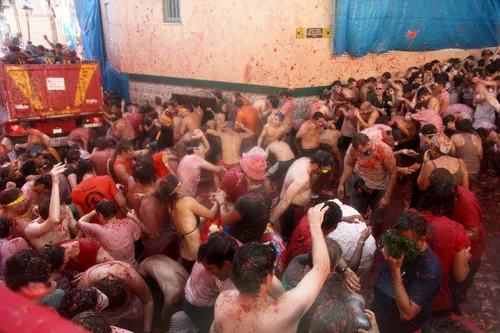
Imagine Holi, but with tomatoes and in Spain. On the last Wednesday of August every year, the small town of Buñol near Valencia hosts La Tomatina, the biggest food fight on the planet. In 2026 it falls on 26 August. At noon a water cannon fires, trucks roll in with about 120 tonnes of over-ripe tomatoes and 20,000 ticket holders spend one glorious hour hurling them at total strangers. By 1 pm the streets run red like a river of chutney, fire hoses wash everyone down and the town returns to normal as if nothing happened. Entry is ticketed at €15, which is about ₹1,550, and tickets sell out months in advance. Valencia, the city of paella and futuristic museums, is under an hour away and makes the perfect base. For an Indian traveller raised on festival colours, this is the most familiar kind of madness abroad. One hour of chaos and a lifetime of bragging rights, that is the deal.

Valencia in next 3 month

jan

-3/16°C

AQI 29
feb

-4/21°C

AQI 33
mar

-4/27°C

AQI 26
apr

5/34°C

AQI 32
may

8/32°C

AQI 32
jun

13/39°C

AQI 34
jul

18/41°C

AQI 35
aug

15/41°C

AQI 36
sep

10/33°C

AQI 30
oct

7/32°C

AQI 27
nov

0/20°C

AQI 28
dec

5/15°C

AQI 39

November in Spain sees cooler temperatures and more frequent rain showers. Air quality remains good.

Usual trip duration

1 week

For a week-long trip to Spain, you can explore the vibrant cities of Barcelona and Madrid, visit historic landmarks like the Alhambra in Granada, relax on the beaches of the Costa del Sol, and immerse yourself in the rich culture and cuisine of this beautiful country.

Moderate to expensive

Spain can offer a range of pricing for tourists, with moderate options for accommodations, dining, and transportation alongside more expensive choices in luxury hotels and fine dining. Prices can vary based on the region and the time of year, with popular tourist destinations being more expensive.

Prices can vary based on the season and preferences.

Interesting facts

La Tomatina began in 1945 when a street scuffle broke out near a vegetable stall during a local parade; the tomato fight stuck, survived bans in the 1950s and became Buñol's identity.

Around 120 tonnes of over-ripe, low-grade tomatoes are grown specially for the fight — they are cheap varieties not meant for eating, so no good food is wasted.

Spain declared La Tomatina a Festivity of International Tourist Interest in 2002, and since 2013 entry has been capped at 20,000 ticketed participants for safety.

Before the fight, locals climb the palo jabón — a tall greased pole with a leg of ham on top. Tradition says the fight begins once someone grabs the ham.

The acid in the tomato pulp acts as a natural cleaner, and Buñol's streets are said to gleam after the fire hoses finish their post-fight wash.

Do’s and Don’ts

Buy your official entry ticket (€15, about ₹1,550) online well in advance — entry is capped at 20,000 and there are no gate sales.

Wear swimming goggles; tomato juice in the eyes is the number-one complaint at the festival.

Wear your oldest t-shirt, shorts and closed shoes with grip that you can throw away after; the streets get slippery.

Squash every tomato in your hand before throwing — this is an official rule that keeps the fight painless.

Carry your phone only in a waterproof pouch, or better, leave it locked in Valencia and buy photos from official photographers.

Reach Buñol by 9–10 am to see the palo jabón ham pole and find a good spot before lanes pack up.

Don't throw bottles, cans or anything hard — only tomatoes are allowed, and stewards remove rule-breakers.

Don't tear other people's t-shirts; it is against the official rules even if it looks common in photos.

Don't keep throwing after the second cannon at 1 pm; the fight ends sharply.

Don't wear flip-flops or chappals — you will lose them in the pulp within minutes.

Don't carry passports, wallets or jewellery into the fight zone; use a money belt with just enough cash.

Don't plan to drive yourself; roads close and parking is impossible, so use the official buses from Valencia.

Budget Breakdown

Travellers

0
1
1

Days

0
5
5

Flights

₹55,000

Stay

₹20,000

Local Transport

₹4,000

Dining

₹10,000

activities (incl ₹1,550 event ticket)

₹4,500

Visa

₹10,600

Total Estimated

₹104,100

Visa Details

Visa Starting From
₹10,600
Get Visa In
15–25 days
Documents Required:
Passport
Visa application form
Photographs
Return flight tickets
Day-wise itinerary
Hotel bookings
Travel insurance
Bank statements
ITR
Employment proof
Cover letter

Things to do

All
palace
island
park
square
museum
cathedral
amusement park
house
mountains
national park
stadium
aqueduct
Alhambra

4.8

Alhambra

PALACE

Stunning Moorish architecture and gardens
Ibiza

4.6

Ibiza

ISLAND

Famous for nightlife and beautiful beaches
Park Guell

4.4

Park Guell

PARK

Colorful mosaic sculptures and architecture
Plaza Mayor

4.6

Plaza Mayor

SQUARE

Historic square with vibrant atmosphere
Prado Museum

4.7

Prado Museum

MUSEUM

World-class art collection
Seville Cathedral

4.8

Seville Cathedral

CATHEDRAL

Gothic masterpiece with a rich history
Toledo Cathedral

4.7

Toledo Cathedral

CATHEDRAL

Gothic and Mudejar architectural marvel
Alcazar of Seville

4.7

Alcazar of Seville

PALACE

Royal palace with stunning gardens
Tibidabo Amusement Park

4.4

Tibidabo Amusement Park

AMUSEMENT PARK

Vintage rides with panoramic views
Guggenheim Museum

4.5

Guggenheim Museum

MUSEUM

Architectural masterpiece with modern art
Casa Batllo

4.6

Casa Batllo

HOUSE

Fantastical Gaudi-designed building
Sierra Nevada

4.6

Sierra Nevada

MOUNTAINS

Skiing and snow sports in winter
Teide National Park

4.8

Teide National Park

NATIONAL PARK

Volcanic landscapes and hiking trails
Santiago Bernabeu Stadium

4.6

Santiago Bernabeu Stadium

STADIUM

Home of Real Madrid football club
Segovia Aqueduct

4.8

Segovia Aqueduct

AQUEDUCT

Ancient Roman engineering marvel

Restaurants

ANACO.

4.9

ANACO.

Arume Restaurant

4.7

Arume Restaurant

La Mi Venta

4.7

La Mi Venta

Disfrutar

4.8

Disfrutar

Retiro Da Costiña

4.8

Retiro Da Costiña

Memoria Gustativa

4.8

Memoria Gustativa

El Nacional Barcelona

4.4

El Nacional Barcelona

Le Bistrot Gastronómico

4.7

Le Bistrot Gastronómico

Platero & Co

4.7

Platero & Co

APONIENTE

4.7

APONIENTE

La Cocina de Manuel

4.6

La Cocina de Manuel

Can Boix

4.6

Can Boix

Restaurant La Barca de Ca l'Ardet

4.6

Restaurant La Barca de Ca l'Ardet

Arrels

4.6

Arrels

Paco Roncero Restaurante

4.6

Paco Roncero Restaurante

365 Restaurant - Son Brull Hotel & Spa

4.6

365 Restaurant - Son Brull Hotel & Spa

Restaurante Casa Mané

4.5

Restaurante Casa Mané

Akelarre Restaurant | Pedro Subijana

4.5

Akelarre Restaurant | Pedro Subijana

Les Quinze Nits

4.2

Les Quinze Nits

a Restaurant

4.3

a Restaurant

Frequently Asked Questions

When is La Tomatina 2026?

La Tomatina 2026 is on Wednesday, 26 August 2026, in Buñol near Valencia, Spain. The festival is always held on the last Wednesday of August. The tomato fight itself runs from 12 noon to 1 pm.

Do you need tickets for La Tomatina?

Yes, entry has been ticketed since 2013 and is capped at 20,000 people. A basic entry ticket costs €15 (about ₹1,550) and must be bought online in advance from official sellers; there are no on-the-spot sales. Packages with bus transfer from Valencia cost more but solve your transport too.

How much does a La Tomatina trip cost from India?

Plan for roughly ₹1.1–1.8 lakh per person for a 5-day trip, covering return flights, visa, Valencia hotel, food and the festival. The entry ticket itself is only about ₹1,550; flights and stay are the real costs. Late-August fares are slightly softer than peak July.

How do I reach Buñol for La Tomatina?

Stay in Valencia and take an official festival bus or tour shuttle on the morning of the fight; the ride takes about 40–60 minutes. The local C3 train to Buñol was damaged in the October 2024 floods and travellers should not count on it — check status before booking. Roads into Buñol close for private cars on the day.

Is La Tomatina safe for Indian travellers?

Yes, it is one of the safer big festivals because the only weapon allowed is a squashed tomato. Risks are minor — slippery streets, eye irritation and pickpockets. Wear goggles and closed shoes, carry nothing valuable and follow the cannon signals, and you will be fine.

What should I wear to La Tomatina?

Old clothes you can throw away, closed shoes with grip and swimming goggles. White t-shirts are the unofficial uniform because they turn fully red within minutes. Keep a clean set of clothes and a towel in a cloakroom bag for after the hose-down.

Do Indians need a visa for La Tomatina?

Yes, a Schengen visa for Spain, applied through BLS International centres in Indian metros. It starts at about ₹10,600 with service charges and takes 15–25 working days in summer. Apply by end-June or early July for a late-August trip.

Can I take my phone into the tomato fight?

Only inside a proper waterproof pouch tied to your body. Tomato pulp gets everywhere and phones are the most commonly damaged item at the festival. Many travellers leave phones at the hotel and buy official event photos instead.

Why do people throw tomatoes at La Tomatina?

It started in 1945 when a local parade scuffle ended with people grabbing tomatoes from a vegetable stall. The town repeated it for fun every year, survived official bans in the 1950s and the tradition became a global festival. There is no religious meaning — it is joy for its own sake.

Is La Tomatina like Holi?

Very much in spirit — strangers, colour, music and an unspoken rule that everyone is equal once drenched. The differences: it lasts exactly one hour, uses 120 tonnes of tomatoes instead of gulal and needs a €15 ticket. Indians often say it is the most Holi-like experience outside India.

Where should I stay for La Tomatina?

Valencia is the best base, with hotels from about ₹5,000 a night and hundreds of dining options. Buñol itself has very few rooms and they sell out a year ahead. Book Valencia hotels by May–June for the late-August festival.

What happens after the tomato fight ends?

At 1 pm a second cannon stops all throwing. Fire trucks hose the streets, locals offer hosepipes to visitors and pop-up showers operate near the fight zone. Most people change into dry clothes, eat a long Spanish lunch in Buñol and head back to Valencia by evening.
playstore
appStore

© 2026 Le Travenues Technology Ltd. India. All brands are trademarks of their respective owners